
Algorithm Under Control
Domestic Propaganda For 170 Million

Hello,
you are reading Understanding TikTok. My name is Marcus. The new American TikTok is here (ICYMI). And it is awful, writes Slate: The app faces an uncertain future—one that might result in a platform that is far more right-leaning, more hostile, and less secure than ever before.
🇺🇸 The power to control a platform
🐸 Checklist: Evaluating Memes
🍦 What else
🇺🇸 The power to control a platform
“The TikTok deal encapsulates every abusive practice of the Trump administration—secrecy, unprecedented claims of executive power, and noncompliance with the law” (The Center for American Progress). TikTok is used by 170m Americans, including some 40% of 45- to 54-year-olds (The Economist).
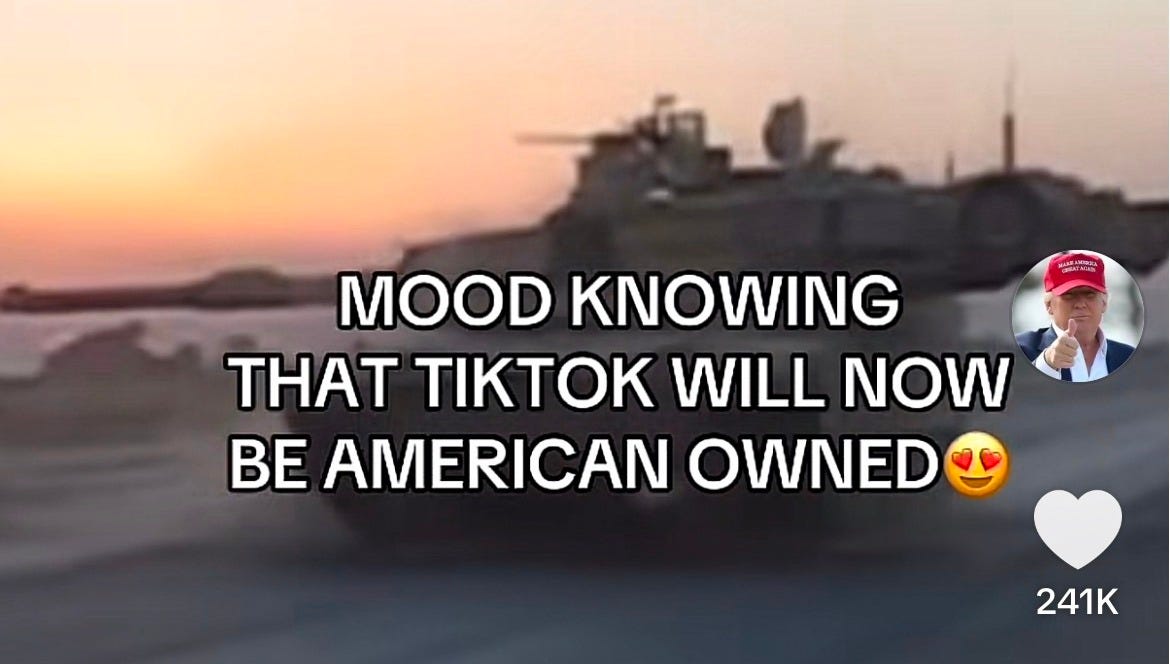
TikTok has sealed a deal for new US joint venture to avoid American ban (Reuters). The newly formed “TikTok USDS Joint Venture LLC” will oversee the app’s operations, including data protection, algorithm security, content moderation, and software assurance (Techcrunch). “The Joint Venture will retrain, test, and update the content recommendation algorithm on U.S. user data. The content recommendation algorithm will be secured in Oracle’s U.S. cloud environment.” (Social Media Today).
“Now Collecting Even More Data”
Who owns TikTok in the U.S. now (New York Times). Learn more on Oracle’s Larry Ellison the “shadow president” (Truthout), the “Oracle-Palantir technology stack” and its role in Israeli military operations (Byline Times) and his broader project to reshape the American media (972 Magazine).
While it is still to early to assess the results of how the retraining of the algorithm will work out, the new privacy policy in the U.S (Last updated: January 22, 2026) shows the way. TikTok Is Now Collecting Even More Data About Its Users (Wired). It is worthwhile to compare the old to the new version.
Old: “Current versions of the app do not collect precise or approximate GPS information from U.S. users.”
New: “If you choose to enable location services … we collect approximate or precise location information from your device.”
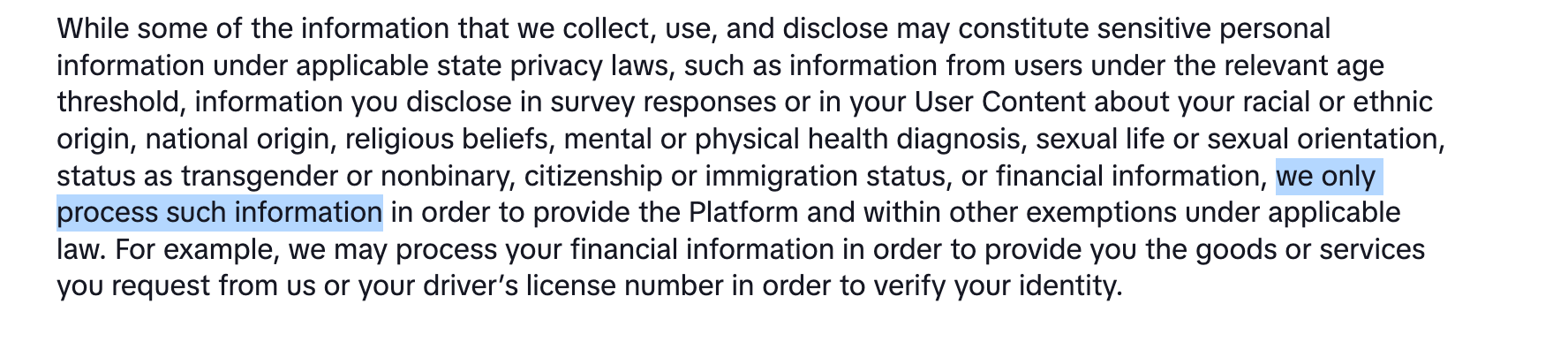
Even if the changes seem small (like reducing a simple word like “only”). Although both versions of TikTok’s US privacy policy (prior and after January 22) list the same sensitive data — including religion, health, sexual orientation, gender identity and immigration status — the updated policy quietly changes who holds power over that information. Earlier language said TikTok would only process such data to operate the platform or under narrow legal exemptions. The new policy drops this limit and instead allows processing for broadly defined “permitted purposes” under California law.
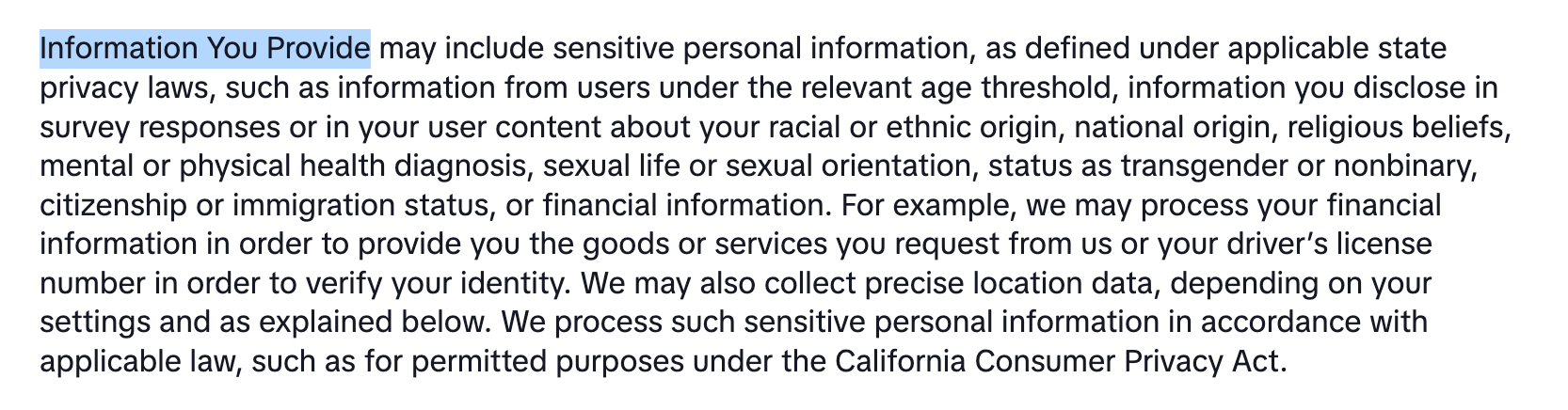
This shift matters because it replaces clear, self-imposed constraints with wide legal flexibility, moving decisions about how deeply sensitive identity data is used away from users and regulators and into the platform’s own hands. In effect, the policy normalises the use of highly personal data as long as it is legally allowed, changing the governance logic from protecting users by default to granting TikTok greater discretion over what it can do with that data.
“The reality of domestic propaganda”
Governments are treating data and platforms as extensions of national influence, and market rules bend when politics and technology collide, Marina Yue Zhang and Wanning Sun write here. “My worry all along is that we may have traded fears of foreign propaganda for the reality of domestic propaganda”, says Georgetown law professor Anupam Chander (New York Times). A win-win for the Trump administration: A platform that collects vast amounts of most sensitive personal data in the hands of a friendly joint venture and yet another platform for propaganda and censorship.
China was just a proxy (Mashable). The whole US TikTok debate was always about infrastructural power. The power to control a platform that shapes public attention, culture, and political visibility.
🐸 Checklist: Evaluating Memes
I’ve created a small newsroom checklist for evaluating memes. It’s called M.A.T.T.E.R. — and it’s designed for those moments when a meme is everywhere and you’re unsure whether to cover it, contextualise it, or leave it alone.
📖 M — Meaning (Lore & Context)
🎭 A — Affect (Vibe)
📱 T — Type (Format & Platform)
⏳ T — Temporality (Lifecycle & Speed)
⚖️ E — Ethics
📈 R — Relevance
M.A.T.T.E.R. helps journalists make sense of memes without overreacting, under-explaining, or amplifying them by accident. It offers a fast, structured way to assess what a meme does, why it works, and whether it actually matters.
Use M.A.T.T.E.R. when a meme feels political, emotional, or risky — to slow down, separate feeling from meaning, assess impact and ethical risk, and make a conscious editorial decision.
I’ve stress-tested the framework on a mix of older and current memes, but I’d really love for others to try it out as well. Feedback, critiques, and edge cases are very welcome: m@marcus-boesch.de
📄 You can find a PDF version here, with additional guiding questions for newsroom use.
🍦 What else
The Trump Administration Is Publishing a Stream of Nazi Propaganda (The Atlantic)
The Great Entertainment (Kyla Scanlon)
TikTok’s ‘2026 Is The New 2016’ Trend, Explained (Forbes)
How China is battling the US online over Venezuela (DFRLab)
What Are “Fan Edits,” and Why Is Gen Z Obsessed With Them? (Inside Hook)
Can TikTok spark a new era of protests? (NPR)
Thanks for reading. If you’re interested in tailored insights, workshops, consulting, or policy support, feel free to get in touch. Here is Linkedin. Here is Bluesky. Ciao
TikTok’s “USDS” handover to Oracle isn’t just a tech deal—it’s the Deep State wiring itself directly into the For You Page. The outages and login chaos this week are what it looks like when a platform is quietly rebuilt to serve a permanent security bureaucracy, not just a foreign owner.
If you feel that knot in your stomach—“who actually owns the switch now?”—that’s exactly what I mapped in my new piece on how Trump beat the US Deep State in 2024 and why every app, from TikTok down, is the next battlefield. I’ve put the full system map and 2016–2024 playbook into a 15‑page, classified‑style briefing for $1 so you’re never guessing in the dark the next time the feed goes “down for maintenance.
Read here- https://open.substack.com/pub/geopoliticsinplainsight/p/us-2024-elections-trump-vs-the-deep?r=72pxma&utm_campaign=post&utm_medium=web